EU Customs parcels €2 handling charge and €3 duty risk undermining IOSS
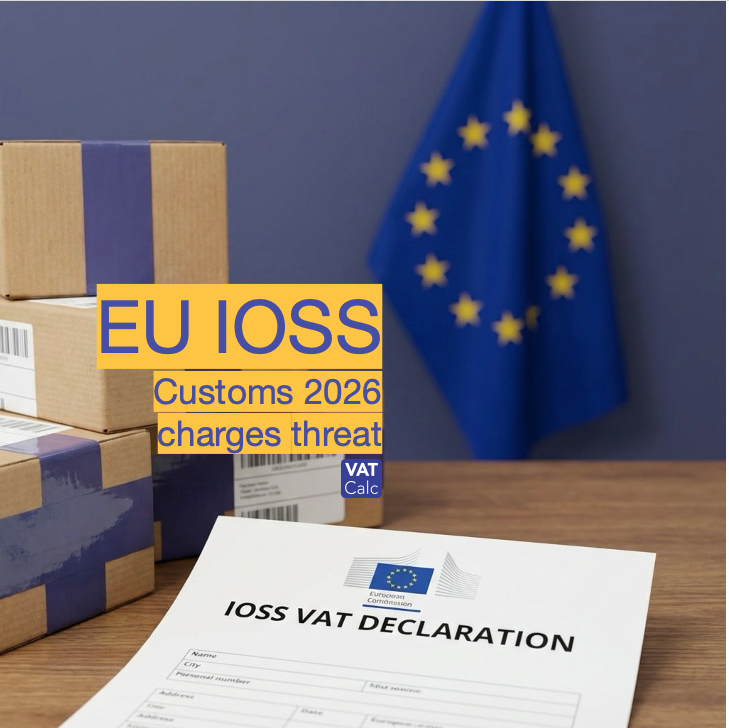
The EU is proposing two new 2026 Customs charges on small-value imported parcels. These will apply on B2C e-commerce packages from outside of the EU typically declared for VAT via the 2021 Import One Stop-Shop pan-EU return. These are temporary measures ahead of 2028 Customs Reforms which includes ending the current Customs duties exemption for consignments not exceeding €150. Whilst still not clarified, these charges would be payable via the IOSS monthly return.
IOSS losses its attractions
But the combination of a November €2 handling charge on parcels and a flat July €3 duty on goods below €150 risks hollowing out IOSS by making compliant, simplified imports more expensive and operationally complex than standard customs procedures—contrary to the original objectives of 2021 VAT and customs reform for e-commerce.
-
IOSS incentive is weakened: The proposed flat €3 customs duty on low-value parcels undermines the core logic of IOSS, which was designed to simplify compliance, eliminate cash-on-delivery charges, and encourage upfront VAT payment. A fixed duty may exceed the actual customs duty otherwise due, making IOSS transactions more expensive for consumers.
-
Consumer demand likely to fall: For low-value goods where the normal customs duty is minimal or nil, a €3 charge per item is disproportionate. This risks discouraging consumers from buying small-value goods via IOSS, threatening the scheme’s viability.
-
Operational burden shifts back to couriers: If the €3 duty cannot be collected digitally at checkout, couriers may again be required to collect charges at delivery. This would reverse one of IOSS’s key benefits and reintroduce friction, delays, and higher handling costs reminiscent of the pre-IOSS regime.
-
Perverse compliance incentives: Express carriers warn that traders using IOSS may pay more than those lodging full customs declarations, especially where tariff rates are below €3 or zero-rated (e.g. books or goods under preferential trade agreements). This reverses the policy intent by penalising the simplified, encouraged compliance route.
-
Policy coherence and legal certainty concerns: While EU retailers welcome the aim of levelling the playing field with non-EU sellers, stakeholders highlight a lack of clarity and coherence. The measures risk fragmenting compliance models, increasing IT complexity, and undermining trust in IOSS as a stable, long-term simplification mechanism.
EU policy makers put in IOSS guard rails
The 2025 agreement for the new charges did foresee the possible risks to the success of IOSS of these measures by putting in regular 3-monthly reviews of the performance of IOSS following their introduction