Report on policy and design considerations for VAT e-invoicing & e-reporting regimes
On 10 January 2026, the OECD published its report Digital Continuous Transactional Reporting for Value Added Tax. The aims to promote efficient and globally interoperable e-invoicing and e-reporting regimes for efficient tax administration and reduced business compliance costs.
OECD studies design and rollout of digital transactional reporting
The report looks at how digital continuous transaction reporting (DCTR) systems for VAT are designed and work. More and more countries are mandating e-invoicing, or thinking about using, these systems. DCTR usually means that businesses must send e-invoice or transaction data to the tax authority almost in real time. The main goal is to improve VAT compliance and reduce fraud and risk.
However, countries have introduced these systems in different ways, without much coordination. This has created many different rules and technical requirements, which makes compliance more complicated — especially for businesses that operate across borders.
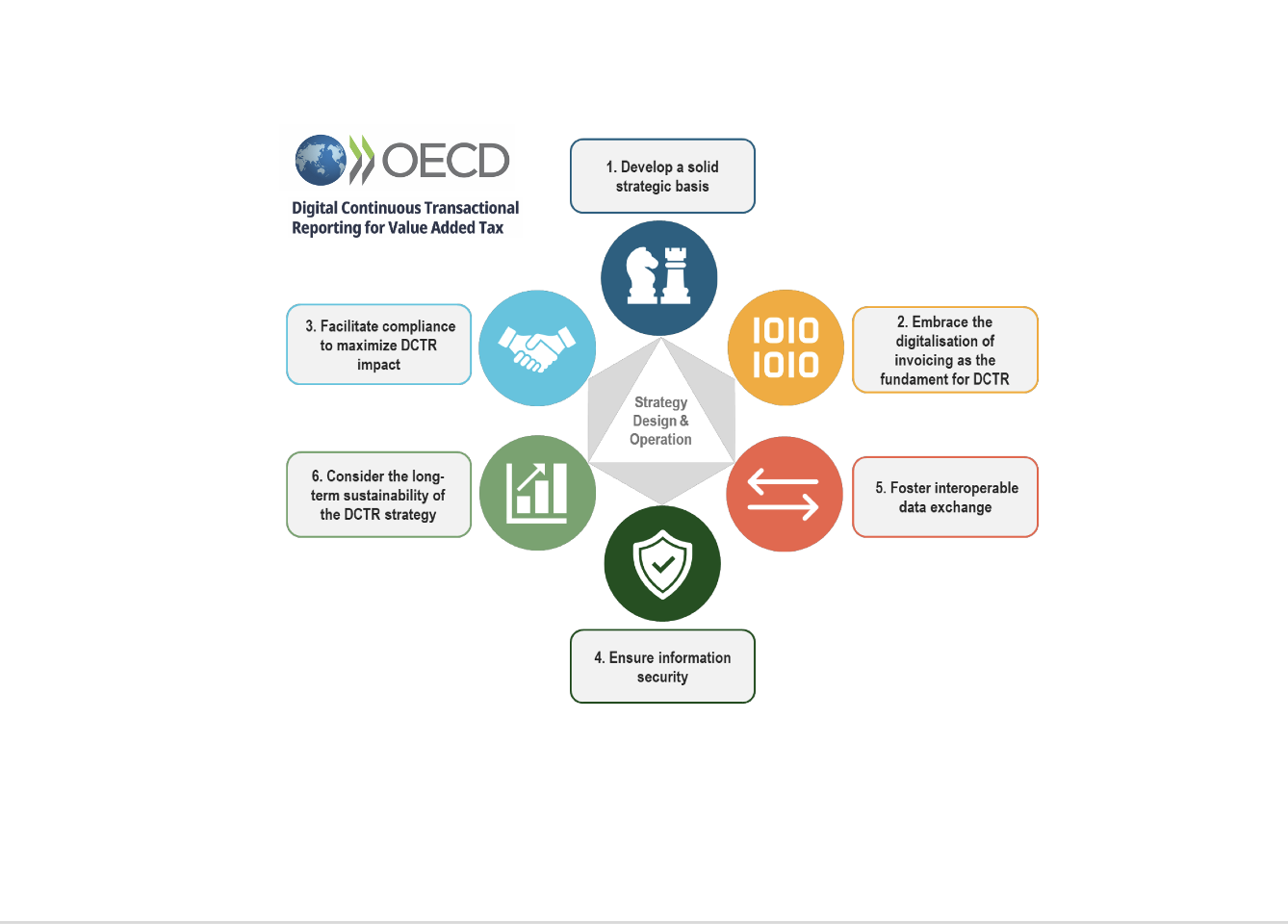
To address this, the report provides guidance to help countries design and run DCTR systems in a more consistent and practical way. It focuses on six main areas: how to plan a DCTR system, using digital invoicing as the base, helping businesses comply, keeping data secure, ensuring systems can work together, and making sure the system remains sustainable in the long term.
DCTR e-invoicing & e-reporting strategy to long-term sustainability

The report examines how governments can design and operate effective DCTR regimes alongside mandatory VAT e-invoicing and electronic transaction reporting (e-reporting).
-
Strategic design and governance
Clear policy objectives must drive the design of e-invoicing and e-reporting models, supported by a robust legal framework, stakeholder consultation, and effective programme governance. Early alignment between tax policy, technology architecture and operational capability reduces long-term compliance risk.
-
Digital invoicing as the foundation
Widespread adoption of structured electronic invoicing enables scalable real-time VAT reporting and automation. Convergence around international standards such as Peppol and EN 16931 improves data quality, interoperability and cross-border consistency.
-
Business compliance and operational efficiency
Well-designed regimes minimise compliance costs through clear technical guidance, sufficient implementation lead time, stable platforms and strong support from software providers and service platforms.
-
Information security and data protection
Strong cybersecurity, data integrity and confidentiality controls are essential to protect sensitive invoice and transaction data and maintain trust in national e-reporting infrastructures.
-
Interoperability and data exchange
Seamless integration between ERP systems, e-invoicing networks and tax authority platforms is critical. Reducing jurisdiction-specific technical deviations improves multinational scalability and vendor reuse.
-
Long-term sustainability and innovation
Continuous monitoring ensures digital VAT controls remain effective, adaptable to new technologies and supportive of international trade without creating unnecessary market friction.
The report provides guidance for jurisdictions considering or operating VAT e-invoicing and e-reporting regimes, without mandating their adoption.