B2B 5-corner Peppol Fawtara e-invoicing & e-reporting pilot underway
Oman Tax Authority confirms main phase 1st April 2027
9 Aug 2026: OTA confirms (Decision No. 189/2026 published in official Gazette 3 August) businesses with turnover above OMR 5million to be mandated for e-invoicing and e-reporting from 1 April and 1 October 2027. This will include e-reporting on B2C transactions
1 Aug: the OTA launched the first phase of B2B e-invoicing mandate for 100 largest businesses

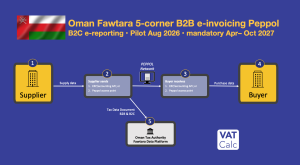
The TA has commenced a phased launch of mandatory e-invoicing based on a 5-corner model including Peppol with Authorised Service Providers able to act as intermediaries for e-invoicing between companies and e-reporting to the Tax Authorities.
- 2026:
- Aug: Pilot wave with 100+ largest taxpayers, plus voluntary registrations;
- 2027:
- April: First wave other largest B2B taxpayers;
- October: Second wave with other taxpayers; and
- 2028
- Aug: B2G likely
Key element of the regime:
- Peppol-based architecture using an enhanced five-corner exchange model.
- B2B e-invoices exchanged electronically between supplier and buyer through accredited Peppol Access Points within 15 days of the VAT triggering event
- Each invoice must carry a unique invoice number
- Supplier-side reporting sends invoice tax data simultaneously to the Oman Tax Authority’s Fawtara platform.
- No separate buyer reporting obligation for domestic B2B transactions.
- B2C invoices also reported to the Tax Authority, generally within 24 hours.
- Single invoice format for structured electronic invoices across the Fawtara platform.
- Accredited Service Providers (Access Points) connect businesses to the national network.
- ERP and accounting system integration via APIs or certified service providers.
- Tax Authority receives structured invoice data, supporting digital VAT compliance and audit.
- Real-time reporting for B2B invoices reduces reliance on traditional VAT audits.
- Supports B2B, B2C and B2G transactions (2028) within a common digital framework.
- Structured invoice data enables future automation of VAT returns, reconciliations and tax analytics.
- The OTA Chairman may grant a temporary exemption where justified.
Oman is following the growing trend of combining e-invoicing with continuous transaction reporting. The critical requirement for businesses is no longer simply generating a compliant invoice, but ensuring VAT determination, invoice content and reported tax data remain consistent across ERP systems, e-invoicing platforms and VAT returns. This is where a legislative-coded tax engine and automated reconciliation become increasingly important.
Oman introduced VAT in April 2021. It was the fourth of the six Arab Gulf states to roll out VAT as part of new Customs and VAT union. So far, only Saudi Arabia e-invoicing has also been introduced at the end of 2021. UAE e-invoicing is expected for 2026.
Bahraini e-invoicing may follow shortly, with the tax offices now completing research on invoice use.