New VAT warehouse regime offers non-resident businesses deferred VAT, improved cash flow and a competitive EU trading hub.
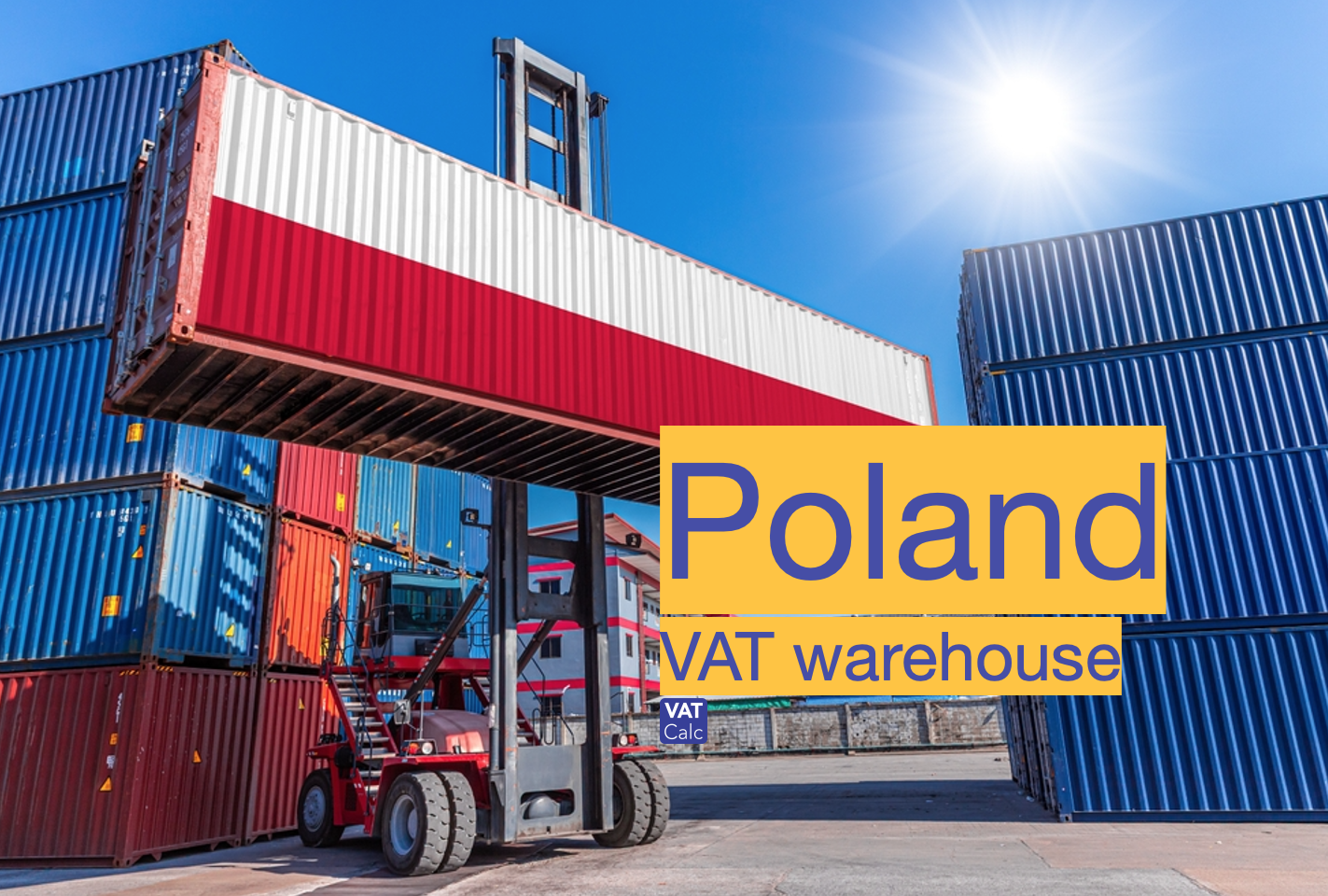
Poland is introducing a VAT warehouse regime, creating a new opportunity for non-resident businesses to store, trade and distribute goods within the EU without the immediate cash-flow burden of VAT.

The Polish Council of Ministers has adopted amendments to the VAT Act introducing the new VAT warehouse (skład VAT) procedure. The regime is expected to enter into force in 2026 and will place Poland alongside countries such as the Netherlands and Belgium that have successfully used VAT warehousing to attract international trading activity.
For commodity traders, logistics operators and non-resident businesses holding stock in Poland, the changes could significantly improve working capital and simplify supply chains.
Polish KSeF e-invoicing completed rollout for most businesses 1 April 2026. See our Poland VAT guide for more details.
What is a VAT warehouse?
A VAT warehouse allows certain goods to be placed into an authorised facility where supplies, acquisitions and related services can benefit from a 0% VAT rate whilst the goods remain under the regime.
Instead of VAT becoming due on each transaction, taxation is effectively deferred until the goods leave the warehouse and enter domestic circulation.
This creates a structure that is particularly attractive for commodities, raw materials, fuels and other high-value inventory that may change ownership multiple times before final consumption.
Why non-resident businesses should pay attention
Foreign businesses increasingly use Poland as a logistics and distribution hub due to its central location, growing warehouse capacity and access to major EU markets.
However, storing goods in Poland often creates local VAT obligations.
Non-resident businesses holding stock in Poland generally need to:
- Register for Polish VAT
- Maintain detailed inventory records
- Account for domestic sales from Polish stock
- Manage import VAT where goods are brought into Poland from outside the EU
The new VAT warehouse regime does not remove these obligations, but it may significantly reduce the VAT funding costs associated with holding inventory.
For commodity traders and distributors, this can release substantial working capital that would otherwise be tied up financing Poland’s 23% VAT rate.
A challenge to Rotterdam and Antwerp?
Poland has a wider European trade strategy.
The Netherlands and Belgium have long attracted international trading businesses through VAT warehousing and similar customs simplifications. These regimes allow goods to be imported, stored and traded with minimal VAT friction.
Poland is now seeking to offer a comparable proposition.
Combined with its lower operating costs, growing logistics sector and strong transport links across Central and Eastern Europe, the VAT warehouse regime could make Poland an increasingly attractive location for regional distribution centres and commodity trading operations.
Chain trading becomes simpler
One of the most significant benefits is the ability for goods to change ownership multiple times whilst remaining inside the warehouse.
Under traditional VAT rules, each transfer can trigger VAT consequences, creating complexity and financing costs.
Within a VAT warehouse, multiple B2B transactions may occur whilst maintaining the 0% VAT treatment, provided all statutory conditions are met.
This structure more closely reflects how commodity markets operate in practice, where ownership frequently changes before physical delivery.
Compliance requirements remain strict
Businesses should not view VAT warehouses as a simplification regime.
Access to the 0% VAT treatment depends on meeting a series of detailed requirements.
These include:
- Operation through a warehouse authorised by the Polish customs and tax authorities
- Physical entry of goods into the VAT warehouse
- Appropriate documentation confirming placement under the regime
- Issuance of a structured electronic invoice through KSeF
- Inclusion of the correct legal basis for applying the 0% rate
- Completion of documentation before the VAT return filing deadline
Failure to meet these conditions could result in the 0% treatment being denied retrospectively, creating unexpected VAT liabilities.
VATCalc comment
The introduction of a VAT warehouse regime represents one of Poland’s most significant indirect tax competitiveness measures in recent years.
Whilst compliance requirements will remain rigorous, the ability to defer VAT and facilitate multiple transactions within a warehouse environment is likely to be welcomed by international traders and non-resident businesses.
As continuous transaction controls, e-invoicing and digital reporting obligations continue to expand across Europe, Poland is combining tighter VAT oversight through KSeF with a commercially attractive warehousing regime designed to attract international trade.